
Santa Clara County Directory Collections
The Santa Clara County collection is centered in San José but reaches into other county towns, suburbs, schools, archives, and digital repositories. The table keeps the research ranges exactly where the library describes overlapping formats. A volume's front matter remains the authority for its publisher, canvass, abbreviations, and town coverage, especially when an apparent end year differs between print, microfilm, and the known published series.
| Collection | Years or contents | Publisher or issue note | Where held | Access |
|---|---|---|---|---|
| San José city directories | 1870-1979 print; 1870-1960 microfilm; known published series described as 1870-1970 | Inspect each volume's title and front matter | SJPL California Room and SJSU King Library | In room; verify gaps |
| Digitized San José directories | Complete 1870, 1887, and 1920; business sections 1870-1918 | Edition and scan metadata supplied with the object | SJPL Digital Collections | Free online images and metadata |
| Haines and Pacific Bell reverse directories | Mid-1960s onward; exact issues vary | Address-first telephone-directory format | California Room | In room; listed numbers only |
| Other Santa Clara County town runs | Gilroy 1964-1983; Los Gatos 1956-1967; Morgan Hill 1968-1983; Mountain View 1962-1968; Palo Alto 1938-1978; San Martin 1970-1983; Sunnyvale 1964-1968 | Town coverage follows the issue | California Room and library holdings | Check catalog and reference desk |
| Great Registers and companion sources | County hardback years 1867, 1879, 1880, 1884, 1890, 1896; microfilm 1900-1944; San José 1946-1956 | Precinct context matters | California Room | In room |
There is no promise of an issue for every year. Publication lag, missing volumes, changing city limits, and the difference between a complete digitized object and a library format range all matter. Record the title, publisher, edition year, page, and collection location before treating an entry as a source.
Santa Clara County Directory Year Gaps
Each volume is a snapshot made during a canvass and released as a publication. Santa Clara County's government record series began in 1850, while the separate city directory shelf developed through publishers, library collections, and changing municipal limits. A person can move after the canvass, appear in print after a delay, or be missed because of the volume's coverage. Earlier San José volumes emphasized property owners. From 1911, spouse names and children over 18 were added, which changes the apparent shape of a household without proving that earlier families lacked those members.
City boundaries also shift. Older San José volumes can include nearby Santa Clara County towns, while a present-day San José address may have been outside historical city limits. The volume's coverage key, neighboring-town issues, and contemporary map are more reliable than a modern city label. The same caution applies to a directory that marks a person as removed or absent.
- 1870: The digitized collection identifies this as the earliest complete San José directory.
- 1911: The library's research tip begins noting spouse names and children over 18.
- 1913: A street index adds an address-first route alongside surname searching.
- Mid-1960s: Haines and Pacific Bell reverse directories extend address-to-householder work.
- 1979: The print format description reaches this year, while other stated ranges end earlier.
Note: A gap between two directory years is a research question, not proof that an address or household disappeared.
Read a Santa Clara County City Directory
A San José city directory entry changes meaning when its marks are read in the volume's own key. Alphabetical entries can provide surname, given name or initial, spouse notation, widow status, occupation, business affiliation, residence address, and sometimes an ownership mark. A street index from 1913 supplies the reverse route from house number to name. The entry is still a publication-year clue, not a complete household census.
| Name | Surname and given name or initial; later issues may add a spouse in parentheses. |
|---|---|
| Household status | Spouse, widow, or adult-child notation when the canvass included it. |
| Occupation | Work description and sometimes a business or institutional connection. |
| Residence | Street number and street name, read with the issue's address conventions. |
| Ownership mark | Some editions mark ownership or property status; absence is not a conclusion about occupancy. |
| Publisher key | Abbreviations and symbols at the front of the volume. |
- Criss-cross directory
- The street-order section of a later volume, arranged for address-first searching.
- Householder index
- An index organized around the adult or household name chosen by the publisher or canvasser.
- Abbreviation key
- The front-of-volume explanation for symbols, short forms, and address or status marks.
Photograph or transcribe the key before copying an entry. A symbol that looks like a status marker can mean something narrower in that edition. Keep the page image, page number, title, and year together so another researcher can read the same context.
The Santa Clara County California Room Trail
The California Room at King Library, fifth floor, 150 E. San Fernando Street in San José, is the main in-person shelf for a Santa Clara County historical directory search. It holds city and reverse directories, Great Registers, county high-school, middle-school, and university yearbooks, newspapers, clippings, microfilm, historic building permits, assessor rolls, maps, and aerial photographs. The California Room Index reaches map, primary-source, scrapbook, and vault citations that may not be in the ordinary catalog.
Current hours are Monday 1 to 6, Tuesday through Friday 11 to 6, Saturday 1 to 6, and Sunday closed. The reference phone is 408-808-2167. The collection is noncirculating, so an in-room visit or a call before travel is important. Remote library-card access can reach some newspaper databases, while many shelf and index items remain onsite.
The San José Public Library California Room collection shows why a local-history room is more than a book shelf.
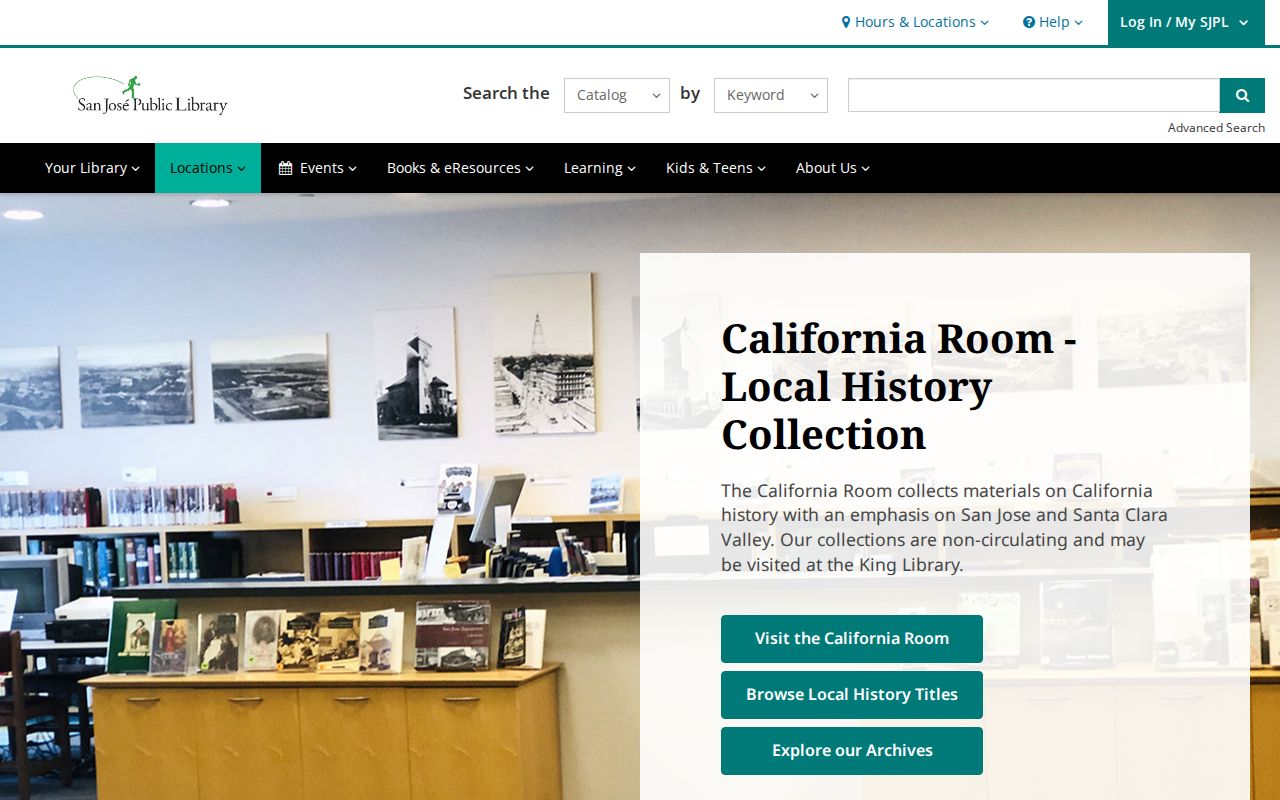
The room connects an old directory entry to maps, newspapers, permits, and photographs that can explain a move or a changed street name.
The broader California Room genealogy guide identifies the directory, census, Great Register, and newspaper paths used alongside the local collection.
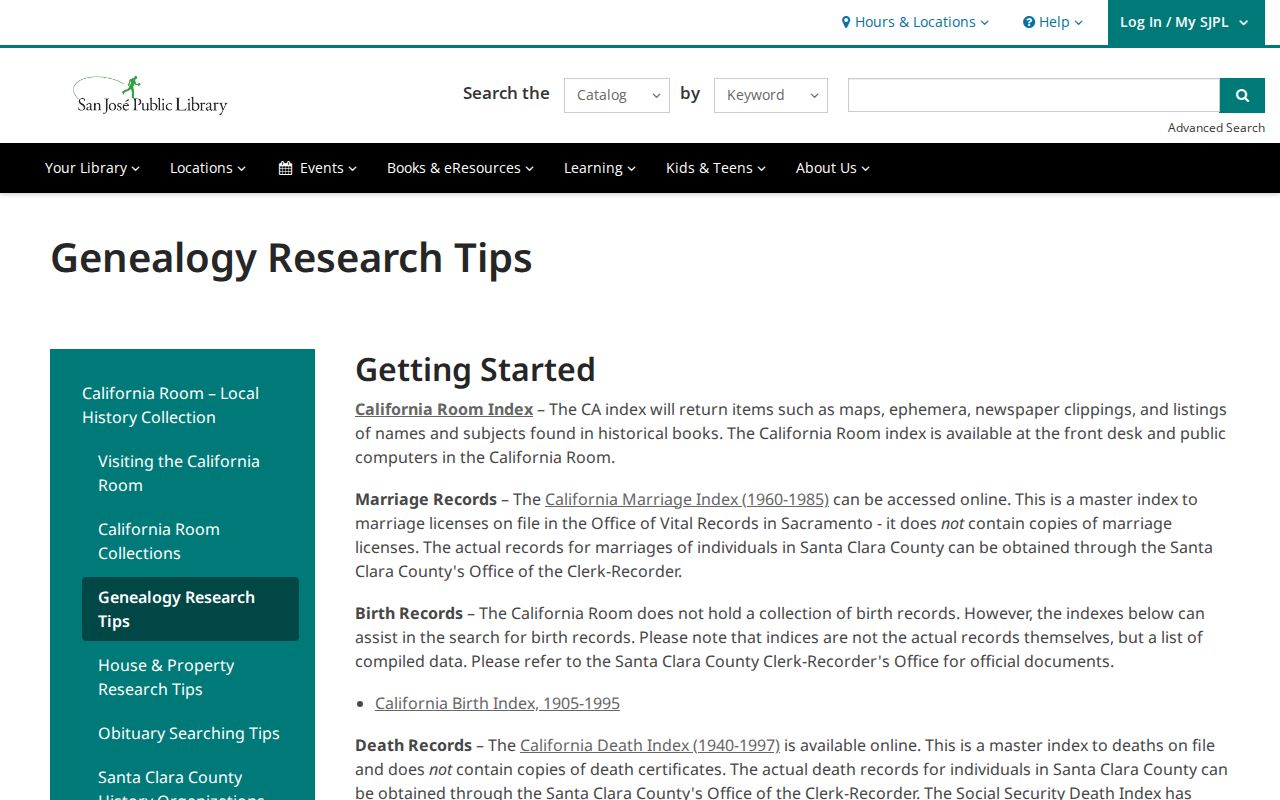
Staff help can distinguish a cataloged volume from an onsite index citation before a research visit.
Open Digitized Santa Clara County Directory Volumes
Digital access is strongest for selected complete volumes, not for every year in the shelf range. San José's complete 1870, 1887, and 1920 directories can be viewed through SJPL Digital Collections, and business sections run from 1870 through 1918. Open the scan, read the title page and front matter, then use the page image to verify OCR, abbreviations, street coverage, and the publisher's own date.
The SJPL Digital Collections search is the first free online route for those selected objects.
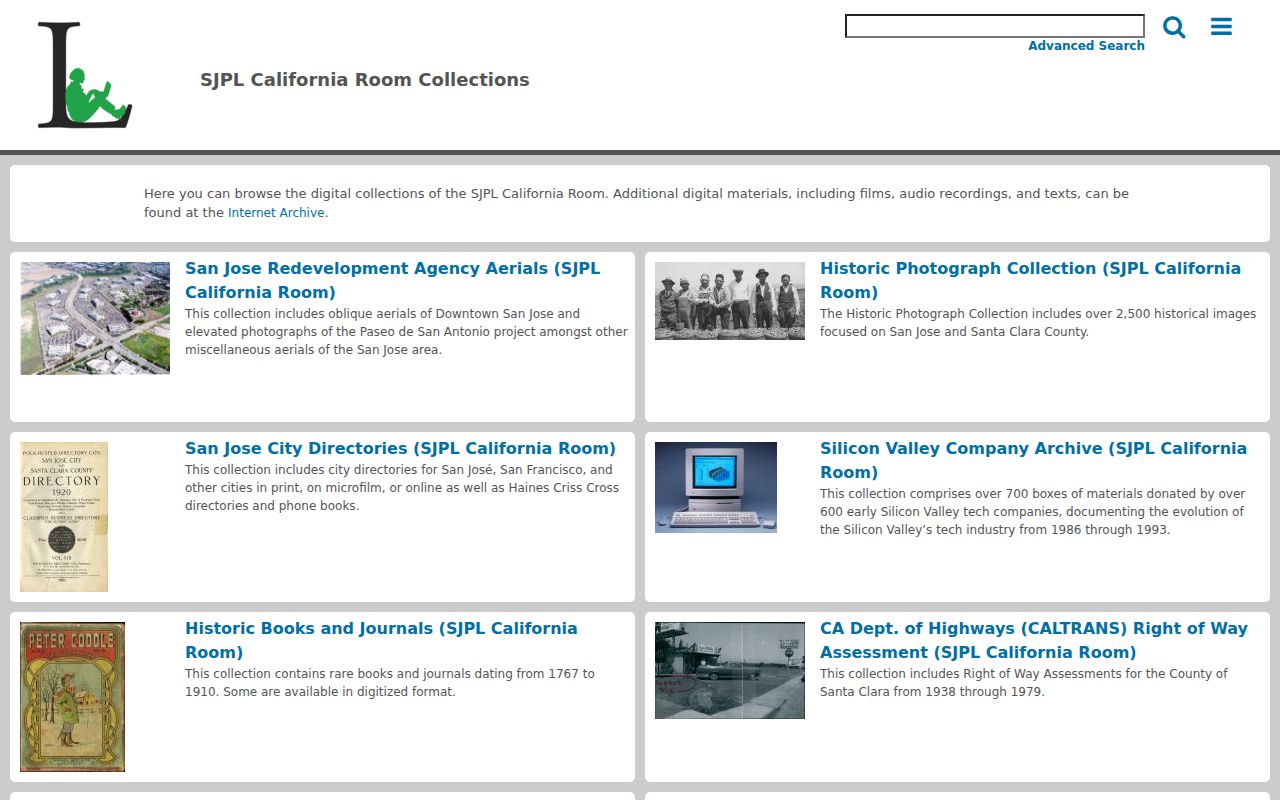
A scan lets a researcher inspect the page and its surrounding entries, rather than relying on one search hit without context.
Additional digitized San José directory scans are discoverable in the Internet Archive directory search. Coverage varies by issue. Preserve the collection title, scan source, edition, and page because a remote copy may not represent the full California Room run.
Digital images extend access, but front matter and the physical collection still decide what a volume actually covers.
Note: A digitized scan proves what the scanned issue contains, not that an unscanned year is missing from the physical shelf.
Santa Clara County Reverse Directory Search
Haines Criss Cross and Pacific Bell reverse directories begin in the mid-1960s and continue address-first research after conventional city-directory coverage thins. A street heading and house number can reveal a listed householder, then an alphabetical section may help locate another address. These volumes reach beyond San José into other county cities and unincorporated areas. They exclude unlisted numbers and may preserve the publisher's own abbreviations or coverage limits.
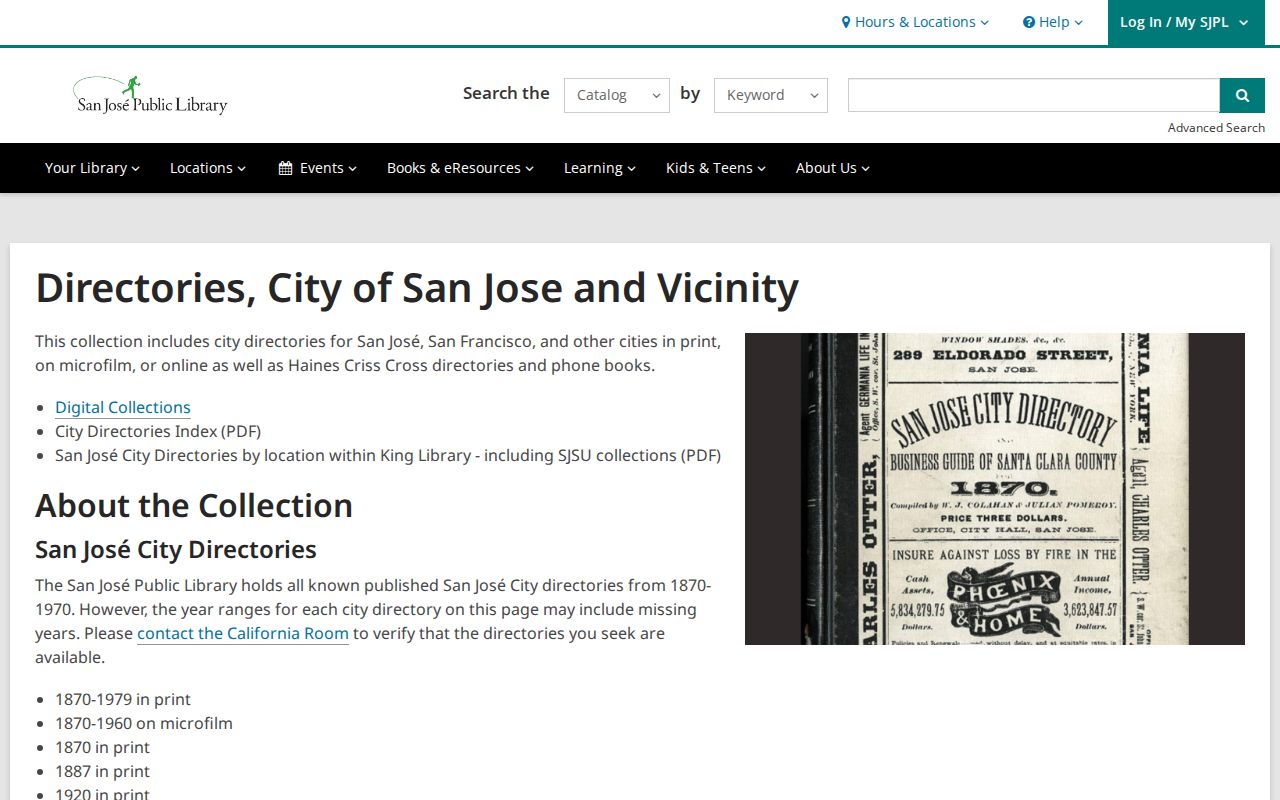
The San José and vicinity directory collection guide gives the clearest coverage and research tips for the reverse shelf.
A reverse entry should be dated, tied to a street form, and checked against a map or address record before it is used as a household fact.
Modern parcel work belongs to the Santa Clara County street directory workflow. The two trails meet at an address, but the historical volume remains the authority for its own publication year.
Trace Santa Clara County Directory Households
Directory tracing works when each appearance is treated as a dated snapshot. Begin with the name or address you know, then move across the nearest available years. Record address, spouse notation, occupation, business affiliation, first and last appearance, and any removal or widow marker. A change can signal a move, death, omission, publication lag, or a city-limit shift. A second source decides which explanation is plausible.
- Establish the historical street form with a map, APN, legal description, or the California Room street-name-change list.
- For 1913 and later, use the street index to browse the house number, then write down every named adult in the entry.
- Search the alphabetical section for the same names and note a new address when the old entry disappears.
- Pair a directory year with the nearest released federal census. The 1950 schedule is the latest individual census schedule open in 2026 under the 72-year rule.
- Use deeds and assessor rolls for ownership, newspapers and obituaries for life events, and permits or maps for the physical address.
- After the printed range, check Haines or Pacific Bell reverse directories, telephone books, and later official records.
Census schedules show household relationships on an enumeration date. A city directory fills some movement between census years. A deed establishes a recorded transfer. Keeping those roles separate makes a family trail clearer and avoids treating any one volume as a complete resident directory.
Note: Pairing a directory with the nearest census year helps expose moves that a single publication cannot explain.
Santa Clara County Community Directory Collections
Mainstream city directories were not equally complete for every community. Name order, transliteration, diacritics, compound surnames, and inconsistent descriptions can split a family across indexes. Chinese American and Japanese American collections at History San José and the Japanese American Museum of San Jose can add photographs, organizations, family papers, and local context where an ordinary volume is thin. They are historical collections, not open modern resident rosters.
Santa Clara University Archives adds Redwood yearbooks from 1902, the student newspaper collection from 1922 to 2013, course catalogs, and scanned Mission Santa Clara baptism, marriage, and burial registers. The modern alumni directory is account-controlled, so a historical yearbook and a present-day directory have different access rules. The California Room's newspapers, clippings, and obituary research can bridge a directory entry to a family event.
For a family reconnection question, start with a school, class year, neighborhood, congregation, or organization clue. Search alternate name forms, then confirm with a dated newspaper, event, deed, or public professional record. A yearbook photograph or club line identifies a past connection, not a present address.
[RESEARCH GAP: the manifest capture for the History San José research-collection page failed; verify the live holdings page before publication.]
Annexation Changes Santa Clara County Directory Addresses
A house can stay in place while its directory context changes. Willow Glen incorporated separately in 1927 and was annexed by San José in 1936. A directory, city archive, map, or newspaper from the earlier period may use the separate jurisdiction. Present-day San José should not be applied backward to every address in the valley.
The county's 15 incorporated cities and unincorporated communities create similar boundary problems. A San José mailing line can be outside the city limit, while Stanford, mountain communities, and South County places bring different library and municipal sources. Check the volume's coverage key, city archives, subdivision map, and address history before concluding that an entry is missing.
Street renumbering adds another layer. In 1913, San José's 14th Street became 17th Street. Search both forms, compare cross streets, and use the legal description or map to tie the two names to the same place. That method is more reliable than a modern street-name search alone.
Note: A directory address should be preserved in its original historical form, with a modern equivalent recorded separately.
Santa Clara County City Directory Evidence
A city directory can establish that a named person was listed at an address or in a town during a publication period. It can show a spelling, spouse notation, occupation, business connection, street number, or ownership mark. It can help locate a school, organization, newspaper, map, or deed trail. It cannot establish a complete household, current address, legal title, voter status, or the reason a person disappeared from the next issue.
| Directory clue | Useful question | Best companion source |
|---|---|---|
| Name and spelling | Is this the same person in another year? | Newspaper, obituary, census, or vital record |
| Street number | Where was the household listed during the issue year? | Map, APN, permit, or deed |
| Occupation or business line | Which local identity clue distinguishes a namesake? | Business or professional index |
| Spouse or adult-child notation | Which family connection deserves a second check? | Census, probate, obituary, or church record |
| Criss-cross entry | Who was listed at the address in that publication? | Another directory year and a street-name map |
Research discipline. Keep the issue year, page, publisher note, address form, and source location together. A precise citation is stronger than a broad claim about a household.
When the historical record stops, the right next source may be a deed, parcel map, court index, obituary, community archive, or official vital record. A city directory is most valuable as the bridge that tells the next source where and when to look.